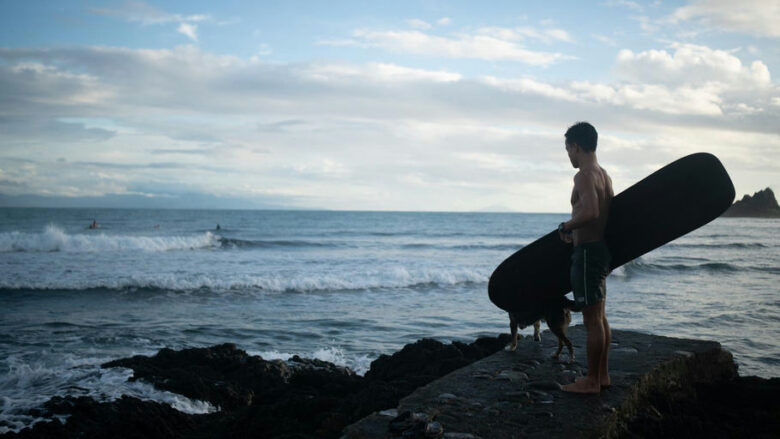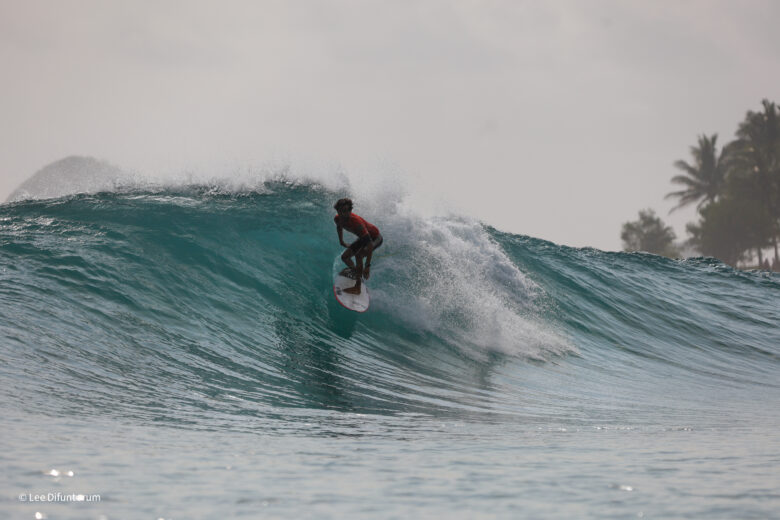
There is something quietly extraordinary about waking to the sound of the sea before you have even opened your eyes. At Kahana, in the early hours before the sun has fully committed to the day, you can hear it — the insistent pull and push of the Pacific, patient and indifferent, doing what it has always done.
Cobra Reef is about eight kilometres south of Sabang — accessible through a mangrove trail that most visitors to Baler never find. If you are a surfer, you already know the name. Fast, shallow, occasionally unforgiving — it is the kind of wave that asks something of you, that tests whether you are paying attention. Both of Kahana’s owners surf it regularly. That matters more than it might sound: the trail is unmarked, the tide window is specific, and the difference between a good session and a wasted trip is usually local knowledge.
That closeness is everything. On the mornings when the swell is right, you can be in the water before the heat settles into the day. On the mornings when the tide is wrong or the sets are simply too much, you can sit by the pool with coffee, watch the horizon, and wait. There is no shame in waiting. The reef will still be there.
We keep the rooms simple and purposeful — board racks for your equipment, air-conditioning for the hours when rest matters as much as riding, and hot showers for when the reef has had its way with you. If you have ever peeled off a rashguard after a session at Cobra, you will understand why that last detail is not a luxury but a kindness.

The Trail
There’s no road to Cobra Reef. You walk in through mangroves — but don’t picture mud. The trail runs over reef, with mangroves growing out of it, and at low tide it’s straightforward enough. At high tide, sections go underwater and you wade.
The footwear situation trips people up every time. First-timers leave their slippers on the shore before paddling out, thinking they won’t need them until the walk back — then the tide drops while they’re surfing, and they’re walking out over sharp reef with nothing on their feet. What you want is a good pair of reef booties, or Crocs, or the locally made equivalent sold at the Baler market for around 350 pesos.
Once you clear the mangroves you hit a rock platform — this is where you leave your gear, watch the break, and get your read on the tide before you paddle out. Anything that can’t get wet goes in a dry bag at the trailhead, not when you arrive. This is exactly why Kahana guests go with someone who already knows the trail, the timing, and the tide — it’s a bigger advantage than any gear you bring.
The Break: The Peak and The Bowl
There are two waves at Cobra: the Bowl and the Peak.
The Peak is what you see in most photos — a right-hander that at full size resembles a hooded, flared cobra, which is where the name comes from. Mostly a right, but mid to high tide opens up a left worth knowing about. The Bowl sits beside it: more open on the take-off, better suited to airs, and on a bigger swell it barrels too. If you’re new to the spot, spend time on the Bowl first — the Peak will still be there.
Tide shapes everything here. High tide gives more water over the reef and a more forgiving entry — a good starting point if you don’t know the break. Low tide is when the barrels come, but also when things get consequential; the Bowl at low tide breaks very shallow and isn’t for the unfamiliar. The sweet spot is 4 to 6 feet at around an 11-second period — that’s when both waves show what they’re capable of. Smaller days suit fish and mid-lengths, and the Bowl stays fun.
When Does the Season Run?
October opens the season — good weather, the crowds haven’t arrived yet, and the waves are already worth the walk. November brings the typhoons and, with them, the biggest swell of the year — spectacular if you’re here for it, but plan around the weather. December the storms clear but the rain stays, and the swell keeps coming. January and February are peak, with waves most days. By March it starts to taper, but the days turn sunny and long. April into May the size drops off and the locals mostly have the place to themselves.
The Rituals That Hold a Surf Trip Together
Every stay at Kahana begins with breakfast. Fruit, rice, eggs — the kind of meal that fills you properly before you go back out, or settles you gently if the morning has already taken everything you had. Our café carries the day through lunch, and the Coconut Mango Matcha has become something of a quiet institution among guests — a recovery drink disguised as something indulgent.
If you are traveling with a crew, we can arrange group meals, or point you toward the spots in town that surfers tend to find their way back to. There is a rhythm to these trips, and we try to support it without interrupting it.
What to Bring
Cobra Reef is not a beginner’s wave, and the bottom does not forgive carelessness. A mid-length or shortboard suited to reef conditions will serve you well. Bring reef booties — the coral is sharp and close. A rashguard or wetsuit top is wise, particularly during Amihan season when the wind has an edge to it. And carry a small first-aid kit for reef cuts; we have found that colloidal silver works remarkably well on the kind of wounds the ocean tends to leave behind.
Alone or Together, the Vibe Holds

Kahana accommodates both kinds of surf trips — the solitary ones, where you come to clear your head and find your rhythm again, and the social ones, where a crew takes over the Deluxe Loft or Group Suites and the common areas fill with board talk and salt-stiffened laughter. We have hosted retreats, surf camps, quiet weekends, and everything in between. What remains consistent is the atmosphere: unhurried, unpretentious, genuinely at ease with itself.
We also know a few lesser-known spots along the coast — places we are happy to share quietly with guests who ask.
Something Worth Returning To

Kahana sits somewhere between what a surf hostel is and what a luxury hotel pretends to be. It is neither, and that is entirely intentional. What it is, instead, is a place built around the idea that a good surf trip deserves a thoughtful place to land — somewhere soulful, well-designed, and honest about what it offers.
If your version of a perfect few days involves the sea at first light, an afternoon in the hammock while the tide turns, and conversation that stretches long into the evening — then you will find, as many have before you, that Kahana has a way of feeling like exactly where you were meant to be.
Frequently Asked Questions
Where is Kahana located?
Kahana is a guesthouse in Baler, Aurora Province, on the northeast coast of the Philippines. The way in to the break is an unmarked mangrove trail — our guests go with someone who knows it.
How far is Kahana from Cobra Reef?
Kahana sits closer to Cobra Reef than any accommodation in Sabang. Getting there involves a walk through a mangrove trail over reef — the timing depends on the tide, and the trail is unmarked. Guests go with someone who knows it. That’s the point.
Is Cobra Reef suitable for beginners?
Cobra Reef is a fast reef break and is generally better suited to intermediate and experienced surfers. If you are still finding your feet, we can suggest calmer alternatives nearby — just ask when you arrive.
What is the best time of year to surf Cobra Reef?
Baler receives consistent swells throughout the year. The Amihan season (roughly November through April) brings northeast winds and can produce excellent conditions, though it also calls for a rashguard or light wetsuit top. The habagat months offer a different rhythm. We are happy to help you plan around the swell windows.
What’s included in a stay at Kahana?
Every stay includes breakfast and use of all common areas — the pool, café, and outdoor spaces. Rooms come with board racks, air-conditioning, and hot showers. The café is open through lunch.
Does Kahana take group bookings and surf retreats?
Yes. Groups typically book the Deluxe Loft or Group Suites. We have hosted surf retreats, weekend camps, and longer stays, and can arrange group meals or help coordinate the logistics of a longer trip.
Are there other surf spots near Kahana besides Cobra Reef?
There are. We know the coast well and are happy to share a few lesser-known breaks with guests — the kind of spots that do not need to be advertised.
What are the two waves at Cobra Reef?
Locals call them the Peak and the Bowl. The Peak is a right-hander (with a left on mid-to-high tide) that gives the reef its name; the Bowl sits beside it, more open on takeoff and better suited to airs. Both break over shallow reef.
What footwear do I need for the trail?
Reef booties or a sturdy pair of Crocs (or the local equivalent, sold at the Baler market for around 350 pesos). Flip-flops fall apart or slide off in the mud, and the reef underfoot is sharp.