Cobra Reef
Most surfers who visit Baler never make it past Sabang. The surf camps are there, the lessons, the boards for rent — everything you need for an easy, good trip. Cobra Reef is eight kilometres south, in Sitio Puntian — though surfers have always called it Cemento, after the sitio you pass through on the way. Most people never find it — not because it’s hidden, exactly, but because getting there requires a walk through mangrove forest on a trail that isn’t marked, isn’t obvious, and changes with the tide.
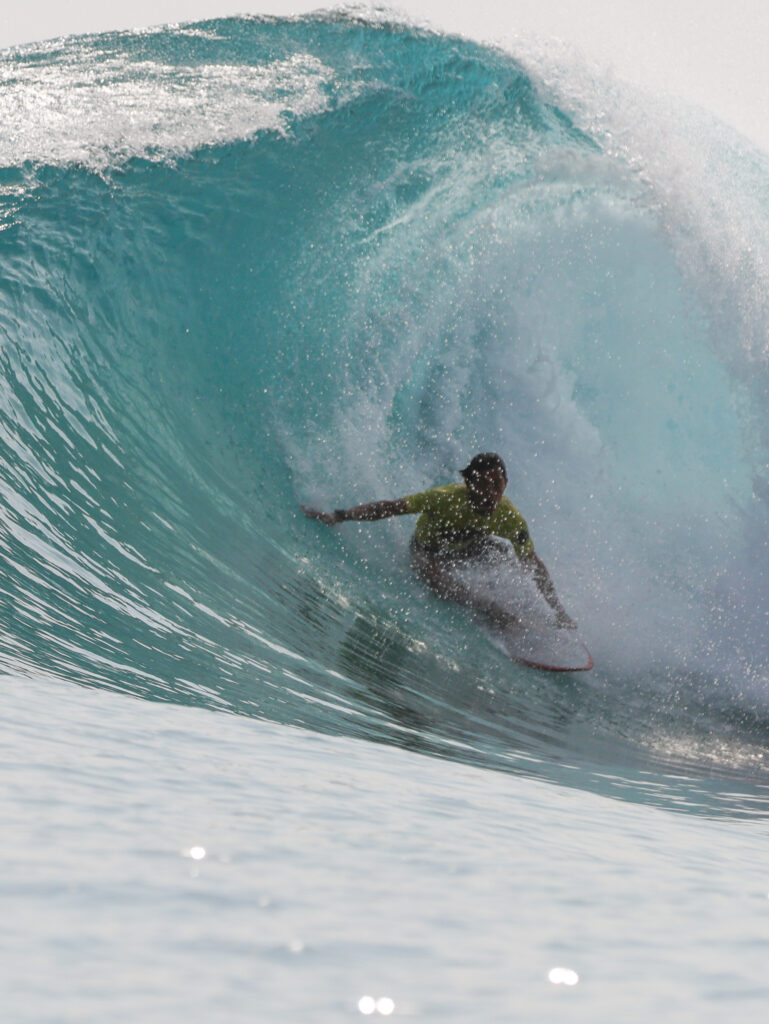
The reef breaks fast and hollow over clear water, shallow in the way that reefs in this part of the Philippines tend to be. A ride along a road lined with coconut palms, mountain forest impossibly green behind them, before the road runs out and the mangroves begin.
The Trail
There’s no road to Cobra Reef. You walk in through mangroves — but don’t picture mud. The trail runs over reef, with mangroves growing out of it, and at low tide it’s straightforward enough. At high tide, sections go underwater and you wade.
The footwear situation trips people up every time. First-timers leave their slippers on the shore before paddling out, thinking they won’t need them until the walk back. When the tide drops while you’re surfing, you’re walking out over sharp reef with nothing on your feet. Bring them into the water, or stash them at the rock platform and plan around the tide — but don’t leave them on the beach.
What you want: a good pair of Crocs, or the locally made equivalent sold at the Baler market for around 350 pesos. Enough grip and sole thickness to walk on reef without thinking about it.
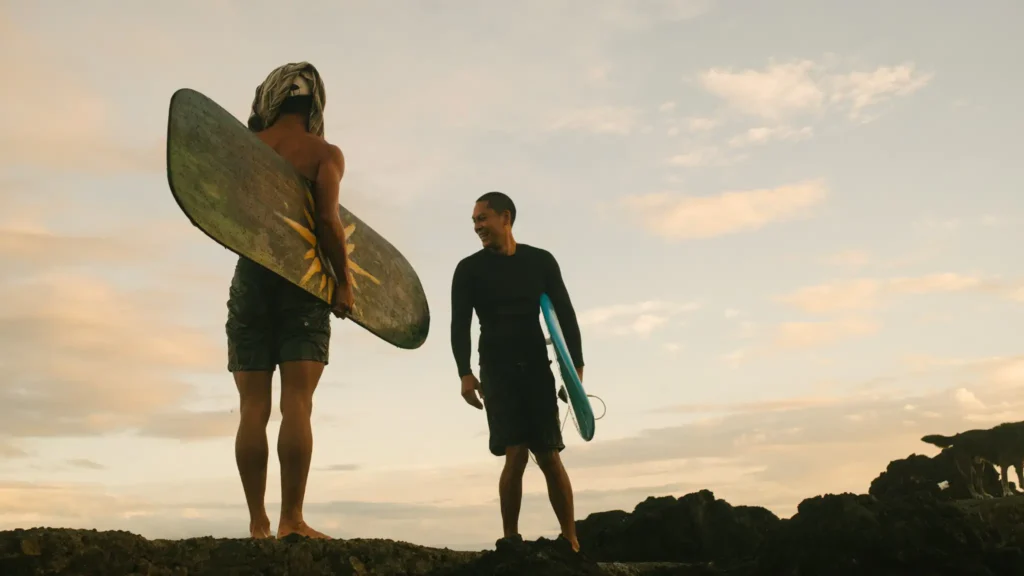
Once you clear the mangroves you hit a rock platform. This is where you leave your gear, watch the break, and get your read on the tide before you paddle out. Keep your bag back from the edge — at high tide, waves sweep the platform and people have lost things. Anything that can’t get wet goes in a dry bag at the trailhead, not when you arrive.
Go at low tide when the trail and reef are most readable. Go in the morning while the offshore is still holding. Whatever you bring, you carry both ways.
The Break
There are two waves at Cobra: the Bowl and the Peak.
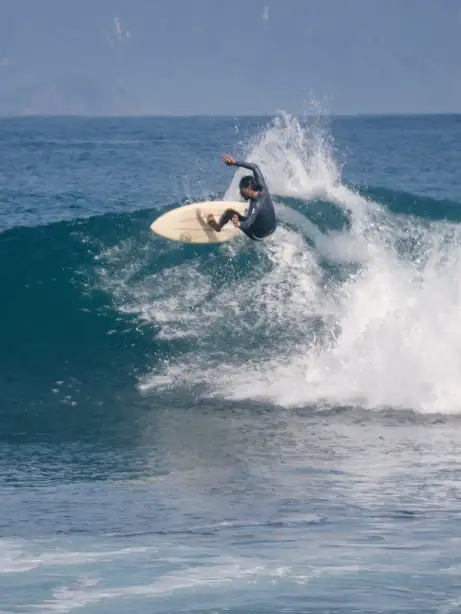
The Peak is what you see in most photos — a right-hander that at full size resembles a hooded, flared cobra, which is where the name comes from. Mostly a right, but mid to high tide opens up a left worth knowing about. The Bowl sits beside it: more open on the take-off, better suited to airs, and on a bigger swell it barrels too. If you’re new to the spot, spend time on the Bowl first. The Peak will still be there.


Both waves break on shallow reef, and the rock platform is the best place to read them before you paddle. The tide window, the channel, where the sets actually peak — it all becomes clear from up there in a way it doesn’t from the water.
Tide shapes everything here. High tide gives you more water over the reef and a more forgiving entry — a good starting point if you don’t know the break. Low tide is when the barrels come, but also when things get consequential. The Bowl at low tide breaks very shallow and isn’t for the unfamiliar. The Peak has a little more water under it, but on a solid swell, a wipeout will find the reef. Go in knowing that.
The sweet spot is 4 to 6 feet, 11 seconds of period. That’s when both waves show what they’re capable of. Smaller days suit fish and mid-lengths, and the Bowl stays fun. Bring options.
When to Go

October opens the season — good weather, the crowds haven’t arrived yet, and the waves are already worth the walk. November brings the typhoons, sometimes Signal 5, and with them the biggest swell of the year; it’s spectacular if you’re here for it, but plan around the weather. December the storms clear but the rain stays, and the swell keeps coming. January and February are peak — waves almost every day, both waves at their best. By March it starts to taper, but the swell is still there and the days turn sunny and long. April into May the size drops off, the visiting crowd thins out, and the locals have the place mostly to themselves.
Go with Someone Who Knows It
The trail is unmarked. The reef is far enough from any road that a bad situation becomes a real logistical problem. And the timing — which tide, which swell direction, whether it’s even worth the walk on a given day — takes sessions to understand, not hours.
Both of Kahana’s owners surf Cobra regularly. You’ll see the same faces out there — six to eight people who live nearby, and a few other locals who make the walk regularly. Between them, they know this break well.
Talk to the Kahana team before you go. They’ll give you the current read, tell you what to wait for, and when the timing lines up, point you toward someone already heading out.
Book your stay at kahanabaler.com